Spelling Spark supports nonspeaking and minimally speaking individuals in accessing their thoughts, ideas, and voices through Spelling to Communicate (S2C).
Communication is not something
to be earned — it is something to be supported.
Communication is possible — even when speech is not reliable.
What Is Spelling to Communicate (S2C)?
A Motor-Based Approach to Communication
Spelling to Communicate (S2C) is a letter-based communication method designed for individuals who understand language but have difficulty expressing their thoughts through speech.Many nonspeaking or minimally speaking individuals experience motor planning and regulation challenges that make spoken language unreliable — even when cognition and understanding are intact.S2C recognizes that communication difficulties are often rooted in movement, not thinking.Through supported access to the alphabet, individuals use spelling to share their thoughts, ideas, preferences, and experiences.Over time, support is intentionally faded as motor skills, accuracy, and independence increase.S2C offers a pathway for individuals to move beyond yes/no responses or limited choices and toward authentic, self-generated communication.

How is S2C Different?
Spelling to Communicate is different because it begins with a fundamental shift in perspective: the belief that understanding exists, even when speech does not.Many traditional communication approaches rely on speech output, behavior interpretation, or selecting from pre-programmed words and pictures. These methods can unintentionally limit expression when motor demands interfere with reliable access.S2C focuses first on motor access and regulation, not on proving comprehension. By using the alphabet — a single, consistent system — individuals are able to express novel thoughts, complex language, and ideas that cannot be predicted or pre-selected.Rather than teaching what to say, S2C creates the conditions that allow a person to say what they already know.This approach is grounded in presuming competence, honoring autonomy, and recognizing that every individual deserves access to a full voice — not a simplified version of one.
For many families, S2C doesn’t change who their child is — it changes how clearly they are finally heard.
“The insides do not always match the outsides.”

Meet Your Practitioner
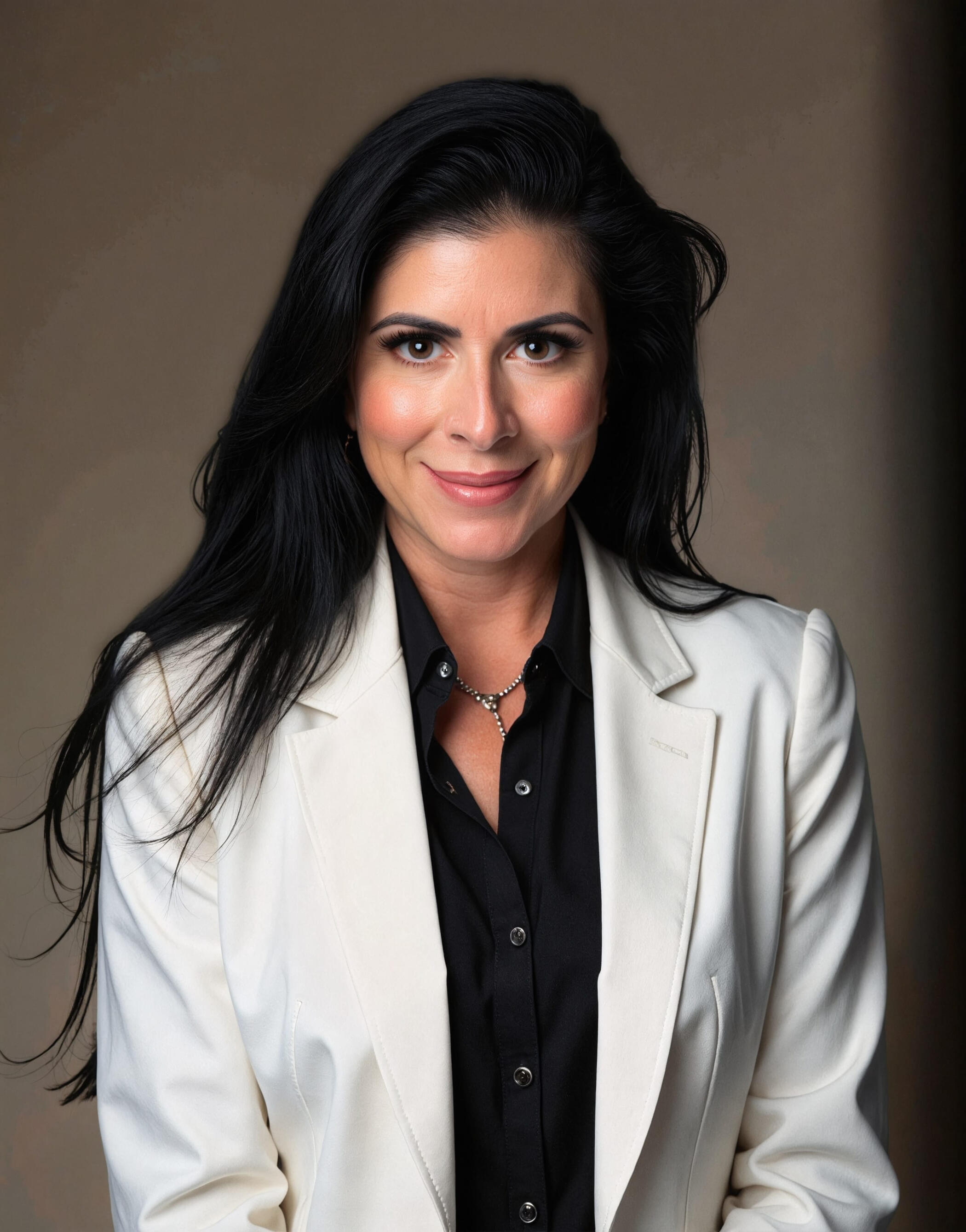
"Communication deserves respect, patience, and the right supports"
Nicole Gant, Owner + Practitioner
Spelling Spark is led by Nicole Gant, an S2C practitioner certified through the International Association for Spelling as Communication I-ASC.Nicole brings over a decade of experience in special education and autism support, including four years as an Autism Consultant and Trainer for Sumner County Schools and four years as a special education classroom teacher. Her work is grounded in current training, ethical guidelines, and learner-centered, motor-based communication practices.This work is also deeply personal. When Nicole’s younger brother, Allen, was born with Down syndrome, she became a lifelong advocate — learning early that intelligence and understanding are often present even when speech is not.That belief guides everything she does:
Communication is not something to be earned — it is something to be supported.
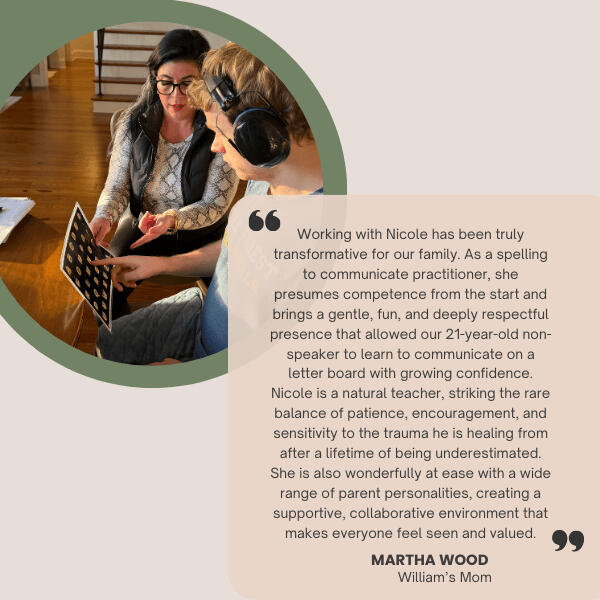
What Families Are Saying
Every learner’s journey is unique, but families often describe a shared sense of feeling understood and supported.
Frequently Asked Questions
GETTING STARTED
What if my child has some speech? Should we still consider S2C?
Yes. S2C is appropriate for individuals who speak some of the time, but not reliably. Many people can speak in familiar, low-pressure situations yet struggle when language becomes more complex, emotional, or demanding. S2C supports communication when speech is inconsistent, effortful, or breaks down under stress — and it does not require giving up speech.
Does my child need to already know their letters to start S2C?
No. Letter knowledge is not a prerequisite. S2C instruction supports learning letters, motor planning, and regulation together. Many individuals demonstrate understanding well beyond what they can initially show through motor output, and skills develop over time with consistent support and practice.
My child uses an AAC device with pictures and words. Why consider S2C?
AAC devices can be helpful, but many require visual scanning and complex motor navigation. For some individuals, this limits expression. S2C uses the alphabet to support flexible, original communication beyond pre-selected options.
COMMUNICATION + MOTOR PLANNING
What is apraxia?
Apraxia is a motor planning disorder in which the brain has a clear message, but the body has difficulty carrying it out consistently. It can affect speech, pointing, and other intentional movements — even when understanding is strong. S2C supports individuals with apraxia by addressing regulation and building purposeful motor skills for communication.
What does “motor planning challenges” mean in simple terms?
It means the brain knows what it wants to do, but the body struggles to carry out the movement reliably. This can affect speech, pointing, or responses — not because the individual doesn’t understand, but because movement coordination is inconsistent.
What does “presuming competence” mean?
Presuming competence is the belief that an individual can think, understand, and learn, even if they cannot yet consistently show it through speech or behavior. Rather than measuring intelligence by speech or behavior, S2C begins with the assumption that individuals have meaningful thoughts worth accessing.
WHAT TO EXPECT
What does a typical S2C session look like?
Sessions are 25 minutes for children under age 7 and 50 minutes for individuals age 7 and older. Sessions focus on regulation, motor support, and meaningful communication. Spellers practice answering questions using a letter board, with support that is gradually reduced as independence grows.
What if my child struggles with attention, regulation, or impulsive movements?
This is very common (and expected) — and it does not mean your child cannot learn to spell or communicate. Many spellers have bodies that feel unpredictable, especially when they are excited, anxious, tired, or overwhelmed.
Sessions include regulation strategies and structured support to help create more reliable access to communication.
What are your session rates and scheduling options?
Sessions are typically 50 minutes and scheduled weekly or twice per week based on family needs.Spelling to Communicate (S2C) support sessions are $100 per session for individuals age 7 and older.For younger learners (under age 7), sessions are 25 minutes at $50 per session, with a focus on regulation, engagement, and early communication access.Payment is due at the time of service. Accepted forms of payment include Zelle, Venmo, check and qualifying HSA funds. HSA eligibility varies by plan and may require provider documentation.Links are below to full service options and rates for families who would like additional details as well as a provider documentation template for those exploring reimbursement options.
(Full Service Options +
Rates + Policies)
(Resource Contacts in Middle TN and Surrounding Counties)
(optional resource for families exploring HSA reimbursement)
PARENT SUPPORT + FUNDING DOCUMENTATION
Do you offer parent education or support?
Yes. Parent support is an important part of the S2C process. Families are gradually invited onto the boards alongside their speller and taught how to support communication at home in ways that feel manageable and respectful.Practice matters. Support is provided step by step, with guidance tailored to each family’s comfort level and needs, as spellers build motor skills, confidence, and consistency over time.
Start Here → Complete Your Intake Form
Getting started begins with a simple first step.
Families complete a short intake form to share a little about their child and ask any initial questions. From there, we connect for a warm, no-pressure conversation to explore whether Spelling to Communicate feels like the right fit.
If it does, the next step is a no-cost, 40-minute initial assessment.
This form helps me get to know your family before we connect. It takes about 2 minutes.

Recommended Resources
For families who want to learn more about S2C, communication access and advocacy.
About Spelling to Communicate + Advocacy
Films + Media
Scientific Research Supporting Spelled Communication
When You're Ready
If you still have questions or would like to explore whether Spelling to Communicate may be a good fit for your family, I’d love to connect.
No commitment required. Questions are always welcome.
When you reach out, feel free to share a little about your learner.